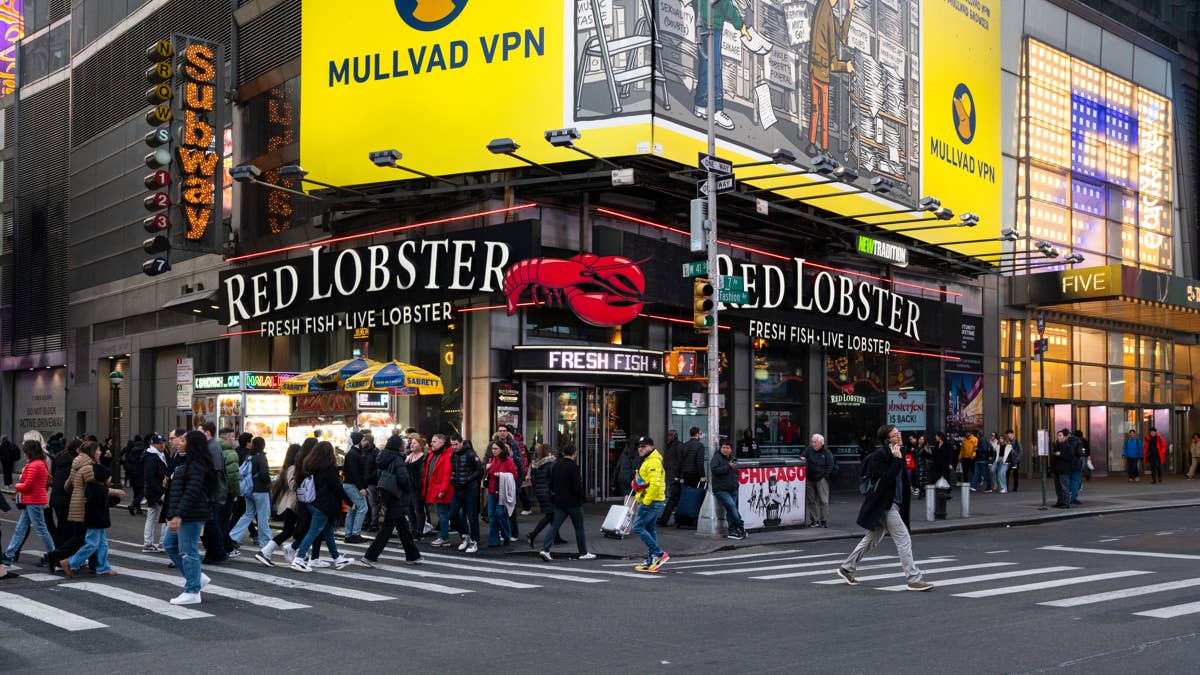
An iconic American seafood chain is preparing to close a restaurant in one of the world’s most visited tourist districts. It marks the end of a 23-year run at a prominent urban location as the company continues navigating the aftermath of bankruptcy, rising operating costs, and a broader effort to reshape its business.
After nearly six decades, the brand has built a loyal following through affordable seafood, its iconic biscuits, and popular value promotions that helped make it a staple of casual dining across the country.
Now, its most prominent location worldwide is set to disappear, becoming the latest casualty of ongoing challenges across the restaurant industry.
New York’s Times Square has long been a showcase for major restaurant brands seeking exposure to millions of annual visitors. Yet even one of the world’s busiest commercial districts has seen several notable departures in recent years, including Planet Hollywood and a flagship McDonald’s location.
Now another recognizable chain is joining that list.
Red Lobster confirms closure of its final Manhattan restaurant
Red Lobster has confirmed it will close its Times Square restaurant at 582 7th Ave. in New York City on June 14, ending its presence in Manhattan after more than two decades.
The three-story location opened in 2003 and became a familiar destination for tourists seeking casual seafood dining in the heart of the city. Its closure means Red Lobster will no longer operate a restaurant within Manhattan.
According to the company’s restaurant locator, Red Lobster still has 16 locations across New York, though none are in Manhattan. The closest remaining restaurant is in Brooklyn, approximately 9.3 miles away.
A company spokesperson said the decision was largely driven by extensive and prolonged construction around the property, which has significantly impacted access, visibility, and customer traffic, making continued operations economically unsustainable, ABC7 reported.
“Times Square has been an important chapter in Red Lobster’s history, and this was a difficult decision,” said Red Lobster in a statement to ABC7. “Extensive and prolonged construction at the building has significantly impacted access, visibility, and foot traffic at this restaurant. Given those conditions, along with the building’s planned conversion to residential use, continuing to operate at this location was no longer viable.”
Employees affected by the closure are being offered transfers to other Red Lobster locations and additional compensation to assist with the transition.
Why Red Lobster is closing its Times Square location
Although the restaurant benefited from one of the busiest tourist districts in the U.S., operating in Times Square came with significant costs.
According to The Independent, the 16,482-square-foot restaurant carried an estimated annual rent of approximately $2.2 million, highlighting the financial challenges of maintaining a large-format restaurant within the nation’s most expensive commercial districts.
The closure also comes as Red Lobster continues recovering from a turbulent period in its history.
The company filed for Chapter 11 bankruptcy protection in May 2024, having accumulated nearly $300 million in debt. Court filings cited rising operating costs, declining consumer traffic, and significant financial losses from its $20 all-you-can-eat shrimp promotion, which alone contributed to an $11 million quarterly loss.
As part of the restructuring efforts, Red Lobster closed about 130 restaurants before emerging from bankruptcy under new ownership by RL Investor Holdings LLC later that year.
Craig T Fruchtman/Getty Images
Red Lobster’s turnaround strategy is still underway
Following its exit from bankruptcy, Red Lobster appointed Damola Adamolekun as CEO in August 2024, tasking him with stabilizing operations and modernizing the company’s business strategy after a string of short-lived CEOs who each served for less than a year.
Since then, Red Lobster has focused on reducing costs, streamlining operations, renegotiating vendor agreements, and reviewing its restaurant portfolio. Additional workforce reductions and location closures have followed as management works to improve profitability.
Here’s some of my previous coverage on Red Lobster:
- After bankruptcy, iconic seafood chain closing more restaurants
- Red Lobster brings back all-you-can-eat shrimp
- Formerly bankrupt chain restaurant makes major change to win back fans
Industry experts caution that cost-cutting alone is rarely enough to restore long-term growth.
“When restaurants cut labor to manage costs, service suffers. When they reduce food quality to preserve margins, customer satisfaction declines. When they defer maintenance to conserve cash, the dining experience deteriorates,” said analysts at the Value Creation Innovation Institute.
Despite concerns, there have been some early signs of progress.
In a February interview with The Wall Street Journal, Adamolekun said sales had increased roughly 10% compared with the year prior. However, he also acknowledged that many restaurants still require investment and operational improvements.
Red Lobster plans more restaurant closures in 2026
Red Lobster continues to evaluate its real estate portfolio, and industry analysts expect additional underperforming locations could close in 2026 as the company focuses on strengthening higher-performing markets.
Many of the chain’s financial challenges can be traced back to 2014, when private equity firm Golden Gate Capital acquired Red Lobster from Darden Restaurants (DRI) for $2.1 billion. To help finance the transaction, the company sold much of the real estate in a sale-leaseback deal valued at around $1.5 billion.
While the move generated short-term liquidity, it also saddled the chain with significant lease obligations that would become increasingly difficult to manage as traffic slowed and costs rose.
Annual lease obligations reached about $190.5 million by 2023, roughly 10% of its revenue, with more than $64 million tied to underperforming restaurants, according to the bankruptcy filing.
Red Lobster ended 2024 with approximately 528 locations. However, some leases bundle multiple restaurants, limiting the company’s flexibility to close weaker stores without affecting stronger ones.
“Much of the liquidity from the sale-leaseback went toward paying dividends to private equity investors rather than addressing systemic operational issues or adapting the menu and brand to shifting market demands,” wrote University of Pennsylvania Professor of Operations, Information & Decisions Gad Allon on Substack. “This misallocation of resources underscores the risks of prioritizing short-term gains over strategic reinvestment.”
Although Red Lobster has made progress since emerging from bankruptcy, its turnaround remains a work in progress.
According to Technomic data, systemwide sales declined 6.2% in 2025, underscoring the ongoing challenges facing the seafood chain as it attempts to rebuild momentum in an increasingly competitive restaurant industry.
Related: Beloved ice cream chain closing location after 40 years
