For most of the past three years, OpenAI has set the pace in artificial intelligence while everyone else played catch-up.
Now, rivals SpaceX and Meta, long written off in the AI conversation, have built products that do something ChatGPT still struggles to sell to ordinary consumers: get real work done without being asked twice.
A new report shows just how seriously OpenAI is taking the threat, and the response involves less building from scratch and more repackaging what it already has.
The details, once you dig into them, say as much about the state of the AI agent race in September 2026 as they do about OpenAI itself.
OpenAI develops new features aimed at SpaceX and Meta
OpenAI is developing new features aimed squarely at two competitors, and the company’s own leadership has discussed launching a dedicated personal assistant to answer one of them directly.
The report describes an OpenAI that feels boxed in on two fronts at once — one from a rocket company-turned AI platform and the other from the world’s largest social media operator.
Rather than engineering an entirely new agent system, OpenAI is expected to repurpose and rebrand agentic capabilities already built into ChatGPT and its coding tool Codex, Investing.com reported.
Those capabilities trace back to GPT-5’s release last year. It was designed to handle longer, multi-step tasks across connected apps such as email and calendars, though everyday users may not know this.
More OpenAI:
- OpenAI just disclosed something genuinely alarming
- OpenAI just admitted something that has the AI industry on edge
- Tech expert predicts an OpenAI collapse
OpenAI’s urgency also has a personal angle. Earlier this year, the company hired Peter Steinberger, the developer behind OpenClaw, a viral open-source personal-agent platform that attracted more than 100,000 GitHub stars within weeks of launch.
CEO Sam Altman said on X (the former Twitter) that Steinberger would “drive the next generation of personal agents” at the company and that the work would “quickly become core to our product offerings.”
That battleground now has two very different challengers standing on it, and neither looked this formidable in AI a year ago.
Grok Bot gives SpaceX a new identity
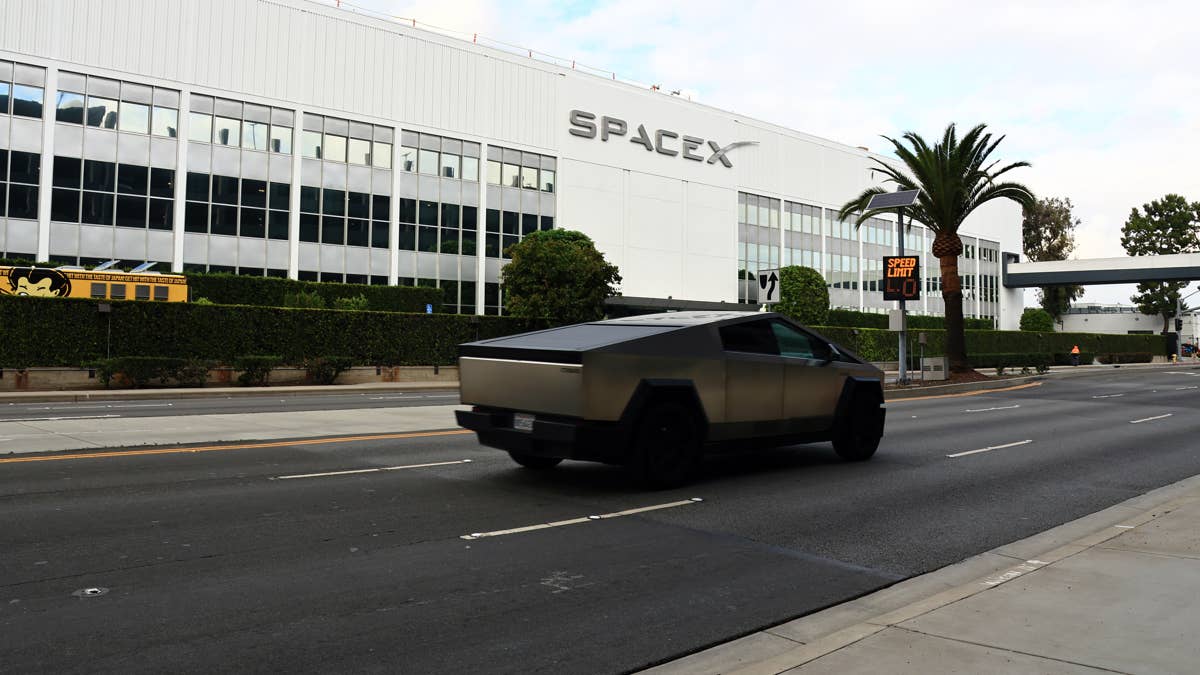
SpaceXAI, Elon Musk’s AI division, which now sits inside SpaceX after last year’s merger, rolled out Grok Bot in August. The tool is built to act like a coordinated team of AI agents rather than a single chatbot. It can log into different apps and websites, retain context across sessions, and let multiple bots share information with each other, Bloomberg reported.
The timing is noteworthy because SpaceX is no longer just a private rocket company that investors take on faith. It listed publicly on the Nasdaq in June, and Wall Street has increasingly priced it as an AI and infrastructure business rather than a pure aerospace play. Shares trade under the ticker SPCX, according to Barchart.
Morgan Stanley analyst Adam Jonas has been one of the loudest bulls on that thesis. He pointed to Grok’s monthly user base and SpaceX’s growing business of leasing compute capacity to companies, including Anthropic and Google, as reasons to value the company well above its aerospace peers.
Not every recent signal has cooperated with that story. Grok’s monthly active users slipped roughly 5% quarter over quarter in the second quarter, and some investors question whether SpaceX’s AI ambitions are as durable as its space business.
Walter Cicchetti / Getty Images
Meta’s Muse adds pressure with explosive growth
Meta’s challenge to OpenAI arrived on Sept. 8 in the form of Muse.
The personal AI agent is capable of sending emails, booking travel, managing payments, and organizing a calendar largely on its own, running on a dedicated virtual machine so it keeps working after a user closes the app.
Wall Street reacted almost immediately. Meta shares jumped on the day of the Muse launch, and two days later, on Sept. 10, JPMorgan analyst Doug Anmuth upgraded the stock to Overweight from Neutral, raising his price target from $640 to $820.
He cited Muse’s early traction as evidence that Meta is beginning to build AI products it can finally monetize beyond advertising.
The usage numbers backed up the enthusiasm. Muse overtook ChatGPT as the top free iOS app in the United States and accumulated more downloads than Anthropic’s Claude and SpaceXAI’s Grok app within its first two weeks.
Wells Fargo analyst Ken Gawrelski went further, raising his Meta price target from $640 to $796. He noted Sensor Tower data showing that Muse hit 264,000 downloads in a single day and 448,000 daily active users within its first 12 days, according to Investing.com.
It took ChatGPT nearly a year to match this pace on daily downloads, and 49 days to reach it on DAUs.
What SpaceX, Meta competition means for OpenAI investors
Neither rival has had a clean run. Amazon blocked Muse from operating on its e-commerce marketplace over security and privacy concerns less than two weeks after launch, CNBC reported. It’s a good reminder that speed and trust are not the same thing when an agent makes purchases on a user’s behalf.
For investors trying to play this trade, there is an added wrinkle. Meta and SpaceX both trade on public markets, giving Wall Street a direct way to bet on their AI ambitions, while OpenAI remains privately held with no public ticker and no confirmed IPO timeline.
That means the competitive landscape can show up in its rivals’ stock prices long before it would ever show up on its own.
OpenAI still has the brand recognition and the largest existing user base in conversational AI, but recognition alone has not stopped Muse from outpacing ChatGPT’s download curve or kept Grok Bot out of enterprise workflows.
How quickly OpenAI can turn its existing tools into something that feels as immediate as its rivals’ new products may decide whether this remains a competitive landscape for much longer.
Related: Mark Zuckerberg and Nvidia CEO weigh in on Anthropic AI proposal
