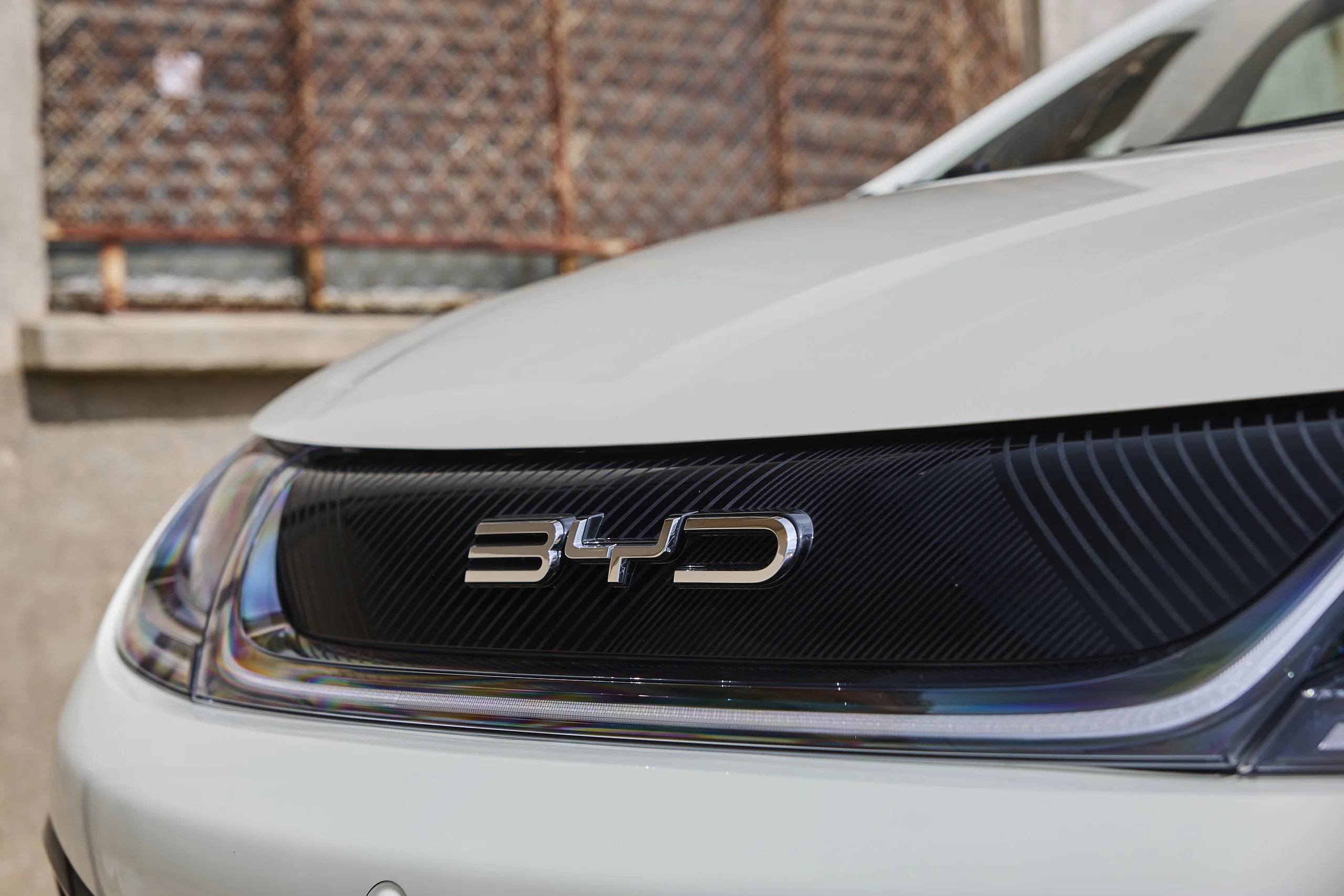
BYD unveiled new service packages on Thursday aimed at accelerating adoption of its “God’s Eye” assisted-driving platform as the company intensifies its push into autonomous driving amid slowing domestic demand and mounting competitive pressure.
Chairman Wang Chuanfu said the automaker’s long-term goal is to achieve “zero traffic accidents” through intelligent driving technology.
As part of the initiative, BYD said it will fully cover compensation and repair costs for accidents occurring while drivers are using its City Navigation assisted-driving feature, without increasing users’ insurance premiums the following year.
The move represents one of BYD’s strongest attempts yet to build consumer confidence in advanced driver-assistance systems as Chinese automakers race to differentiate through AI-enabled driving technology.
BYD also unveiled a new self-developed 4-nanometer automotive chip designed to support Level 3 and Level 4 autonomous driving capabilities.
The company said some of its lower-cost vehicle models could be upgraded to the more advanced God’s Eye B system for approximately 12,000 yuan ($1,770).
Pressure mounts in China’s EV market
The autonomous driving push comes as BYD faces growing challenges in China’s domestic EV market.
The company recently posted its steepest quarterly profit decline since 2020 as aggressive pricing competition compressed margins across the industry.
Its latest battery upgrade — the company’s first major overhaul in six years — has so far failed to reverse slowing domestic sales momentum.
China’s electric vehicle market has become increasingly crowded, with local rivals accelerating the rollout of AI-based assisted-driving systems trained on large-scale real-world driving data.
Xpeng, Nio, and Li Auto have all expanded autonomous driving capabilities aggressively over the past year.
Meanwhile, Tesla is still awaiting full regulatory approval to deploy its most advanced Full Self-Driving features in China.
That delay has become increasingly important as Chinese automakers rapidly localise AI driving systems and integrate them into lower-cost models.
BYD’s European expansion accelerates
Even as profitability weakens domestically, BYD continues scaling aggressively overseas, particularly in Europe.
The company registered 27,008 vehicles across Europe in April, more than doubling year-over-year.
According to data from the European Automobile Manufacturers’ Association, BYD registered 50,646 vehicles in the European Union during the first quarter, a 169.7% increase from a year earlier.
That lifted BYD’s EU market share to 1.8%.
Including the UK and EFTA markets, BYD delivered roughly 73,847 vehicles during the quarter, giving it a 2.1% market share compared with 0.9% a year earlier.
By contrast, Tesla’s European market share remains well below the levels it held before its recent slowdown.
BYD’s European strategy increasingly relies on leveraging higher overseas margins and rising export volumes to sustain pricing pressure abroad.
The company exported 319,751 passenger vehicles and pickups during the quarter, up 65.2% year-over-year.
It is also tailoring products specifically for European consumers.
BYD recently introduced the Dolphin G DM-i, a model designed for European tastes and expected to launch in the UK later this year at a starting price below £20,000.
The post BYD expands ‘God’s Eye’ rollout amid EV price war appeared first on Invezz
