The Federal Reserve’s July policymaking meeting ended with no interest-rate hikes nor forward guidance but with a boatload of Fed speak and word salad.
Kevin Warsh insisted the Fed will still be able to lower inflation to its 2% target — a measure it has missed for five years — but didn’t say how.
He also wants U.S. households, businesses and investors to continue to be patient with the central bank.
Meanwhile, markets stumbled after the Federal Open Market Committee voted 9-3 to hold benchmark short-term interest rates steady on July 29.
The 30-year Treasury yield hit 5.2% and the Dow closed down 1,153.18 points (or -2.19%) signaling Wall Street’s concern that the new Fed chair’s approach won’t be able to beat back inflation much longer thus leading to even higher rate hikes.
Cetera Financial Group Chief Investment Officer Gene Goldman said that the market was not “shrugging off” the hold.
“It’s a market betting a hike is coming sooner. September, right after Jackson Hole and with a new dot plot in hand, is shaping up to be the meeting that matters,’’ Goldman told TheStreet in an email.
Warsh is choosing flexibility over clear guidance offered by past Fed chairs on purpose, Goldman said.
“He wants the debate out in the open instead of settled behind closed doors. That means more ups and downs around every Fed decision this year, since the market doesn’t get a clear heads-up anymore on what’s next,’’ Goldman said.
TradeStation Global Head of Market Strategy David Russell said the Iran War and the recent resumption of military escalation is key to what the Fed’s next move will be.
“Hikes are coming into focus as inflation runs ahead of the Fed’s target. Policymakers are getting more hawkish and putting September into play for a tightening move,’’ Russell said.
“It all comes down to energy. Given the situation in the Middle East, oil prices are in the driver’s seat and the Fed is going along for the ride,’’ he told TheStreet in an email.
Warsh doubles down on reducing inflation risk
Warsh repeated his pledge that the Fed is committed to bring inflation down to the 2% target. He was also repeatedly mum on how that would be achieved.
“For some households, businesses and market professionals, five years of high inflation have left a mistaken impression-that’s hard to shake — that the Fed’s implicit inflation target was somehow above 2%,” Warsh told reporters.
“Let me reiterate: There is no soft inflation target,” he added. “There is no soft implicit target, not on this committee’s watch.”
He emphasized that the two-day meeting was ripe with active and robust efforts from all 12 participants to create a valuable outlook for monetary policy and referred frequently to the five task forces he commissioned to study and recommend reforms.
“There was nothing inertial about our discussions, our policy or our strategy,” he said.
Warsh’s mission: To kill inflation
TheStreet Pro veteran portfolio trader James “Rev Shark” DePorre said that while Warsh has gained “the respect of many folks on Wall Street, he has a tough job.”
“He has changed the entire dialogue of the Fed and it isn’t just a matter of being hawkish or dovish,’’ DePorre said. “His mission is to kill inflation and he is moving in that direction in a methodical and sober way, but he can’t do that without some pain.’’
The post-meeting statement was a terse five paragraphs that described the economic activity as “expanding at a solid pace despite elevated uncertainty that owes, in part, to the conflict in the Middle East.’’ It cited the energy shocks that have driven up prices in some sectors.
Fed’s mandate balances jobs and prices
The Fed’s congressional dual mandate requires full employment and price stability.
Here’s the tricky part:
- Lower interest rates support hiring but can fuel inflation. This risks fueling further inflation, potentially leading to an inflationary spiral.
- Higher rates cool prices but can weaken the job market. This increases the cost of borrowing and further stifles economic activity.
Fed holds interest rates steady thus far this year
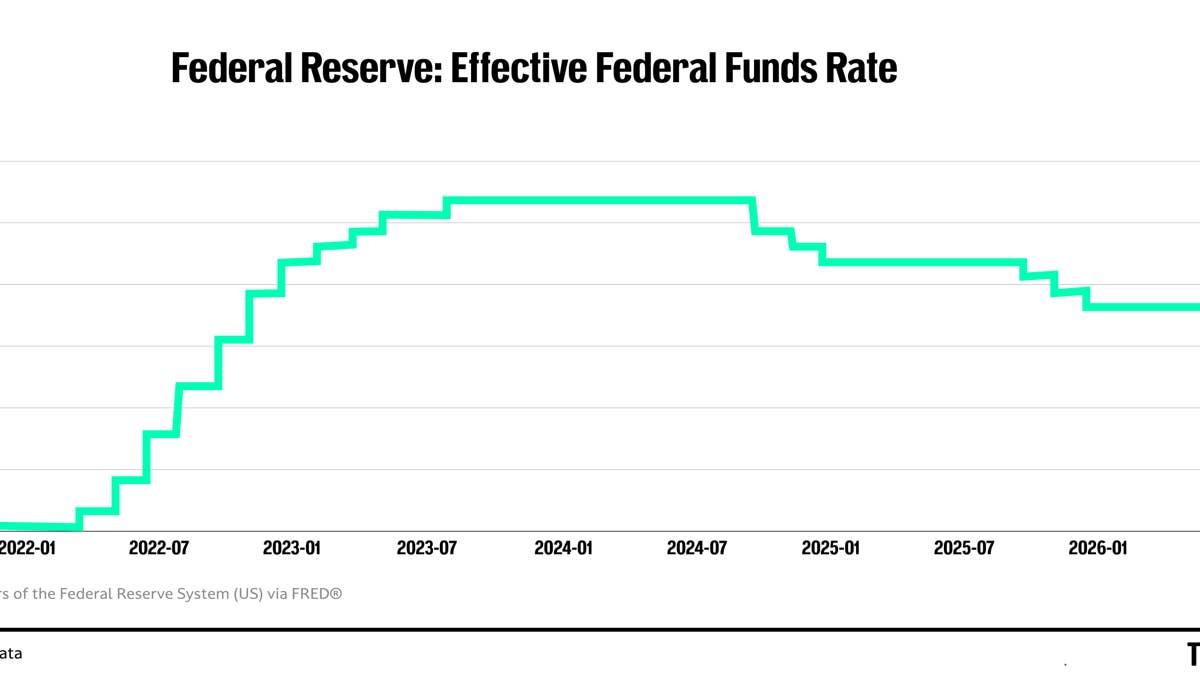
The rate-setting FOMC voted unanimously in June to hold its benchmark Federal Funds Rate target in a range of 3.5% to 3.75%.
But, as I reported, the minutes of the June FOMC meeting showed policymakers splitting their views on inflation risk and the impact on interest rates with a rising hawkish tinge to the quarterly dot plot.
Related: Fed decision resets mortgage rate forecast
The three Fed presidents who voted for a 25 basis-point hike in July — Cleveland’s Beth Hammack, Minneapolis’ Neel Kashkari and Lorie Logan of Dallas — expressed concerns about the impact of underlying inflation after the June meeting based in part on comments and observations from consumers and businesses in their regions.
“A hawkish hold does not close the door on potential rate hikes as soon as September, but it offered some near-term relief to both equities and fixed income amid elevated uncertainty about the Fed’s path forward,” Edward Jones’ Angelo Kourkafas told The New York Times. “The three dissents were not surprising, though they may signal the direction of travel if geopolitical tensions persist.”
Traders reset Fed interest-rate bets
Policymakers had cut rates by 25 basis points at its last three meetings of 2025 to shore up the softening labor market.
These “insurance” cuts stopped after the majority of policymakers decided the risk from higher prices was outweighing signs that the jobs market was stabilizing.
- September Shift: Traders now price in a 67.9% chance of at least one 25 basis-point rate hike from the current 3.50%-3.75% level during the Sept. 15-16 FOMC meeting, according to the CME Group FedWatch Tool. “There will be a lot of data in the interim, but with oil prices spiking back up and the Iran situation still a mess, inflationary pressures are not coming down,’’ DePorre said.
- December Tightening: By the end of the year, the CME Group FedWatch Tool leans heavily toward a 45.8% probability of at least a 50-basis-point hike with a 36.5% probability specifically for a 4.00%–4.25% target range.
Can the Fed afford to wait out inflation?
The economic shocks of the past two years aren’t discrete events the Fed can wait out, Daleep Singh, a former New York Fed executive told The Wall Street Journal.
Singh, who is now chief global economist at PGIM, said the Fed should stop counting on inflation to drift lower on its own, and that hiring strong enough to keep unemployment from rising gives it an unusual opening to tighten without the job losses that usually follow.
The longer it waits, Singh said, the higher rates would eventually have to rise.
President Donald Trump repeated his call for interest-rate cuts after the FOMC meeting, stating that the United States “should have the lowest rates in the world.”
Trump, who called Warsh a “brilliant guy,’’ blamed other members of the FOMC for failing to drastically reduce interest rates.
The president said Warsh would prefer to lower rates but described the FOMC as a “political board” with some members who “want to keep rates up.”
How the Fed impacts your wallet, mortgage
The Federal Funds Rate is the interest rate at which banks lend balances at the Federal Reserve to other banks overnight.
A change in the funds rate triggers moves in short-term borrowing costs ranging from credit cards, auto loans, student loans and home-equity loans. The funds rate also impacts interest on savings accounts and CDs.
Mortgage rates are a different animal.
Chip Hughey, Managing Director of Fixed Income at Truist Advisory Services, told TheStreet in an email that Fed rate decisions can have knock-on effects for longer-term rates, too.
“The Fed’s decision to forego a rate hike today is recalibrating inflation outlooks higher, which also fuels higher long-term interest rates,’’ Hughey said. “As a result, 30-year fixed mortgage rates are likely to rise further this week and remain elevated until global inflation concerns ease on a persistent and sustainable basis.”
But he added that the sluggish housing market is being hampered more by home prices than mortgage rates and that a “housing supply/demand imbalance has driven home prices up approximately 40-50% since 2020, which has had a far greater impact on affordability.”
Related: Fed’s Warsh faces tough interest-rate smackdown in Congress
