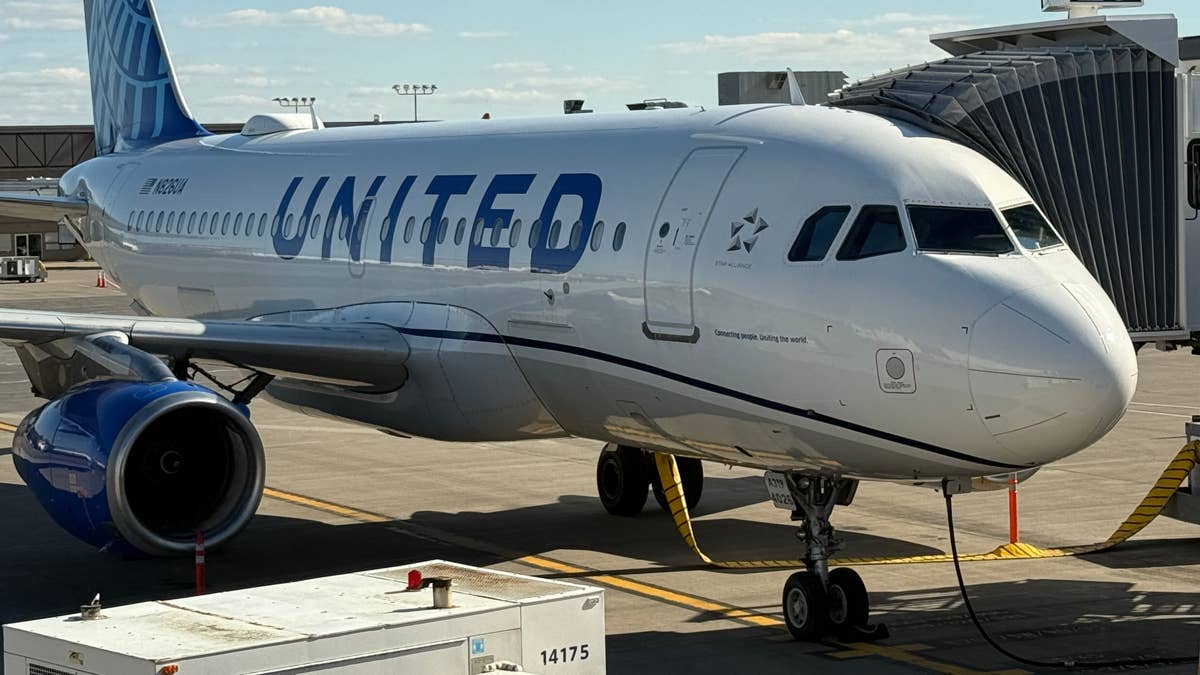
The Elon-Musk-Delta-Air-Lines-CEO-Ed-Bastian feud over Starlink that I covered for TheStreet got me thinking about how airlines still seem to underestimate what passengers now expect from in-flight Wi-Fi.
As mentioned before, I spend most of my day following markets, tracking financial news, and writing stories for readers like you. So I can imagine the frustration of paying for Wi-Fi at 35,000 feet, only to watch the connection drop just as you’re trying to get something important done.
And it’s not just about getting work done. For some passengers, it’s about staying connected to family. For others, it’s simply about streaming a movie without interruption.
That’s what makes the Musk-Bastian disagreement, over the airline’s decision not to use Starlink, more than just another public spat between two high-profile executives.
And it’s why former United Airlines chairman and CEO Oscar Munoz weighed in on CNBC’s Squawk on the Street.
Also Read: United Airlines filed for bankruptcy 22 years ago — here’s why
United’s CEO Oscar Munoz’s message to airlines was simple
Munoz joined the conversation on Oct. 9, as Delta Air Lines (DAL) reported a miss of Wall Street estimates, marking Delta’s first earnings miss in two years.
More Airlines:
- Another low-cost airline files for bankruptcy protection
- JetBlue, Southwest Airlines, and Allegiant make pricing move
- Southwest Airlines kills routes to multiple markets
Musk said Bastian would “lose his job” over Starlink rejection. Bastian’s response was pithy: “There’s no tit for tat as far as I’m concerned.”
Munoz navigated his own connectivity debates for about 56 months as United’s CEO and didn’t take sides. But Munoz said something that every airline passenger instinctively understands.
Customers are very, very particular about that particular situation. They want access, they want prices, and they want to get to where they wanna go.
What the former United CEO was saying matters beyond the Musk drama
It’d be easy to read Munoz’s comments as a gentle defense of Delta’s judgment — “Delta gets it, they’re going to put the right thing in,” he said — while also acknowledging that the Starlink product itself is outstanding. He said he knows it well, having spoken with Amazon CEO Andy Jassy about low Earth-orbit satellite internet.
But the deeper point Munoz was making is that airlines have spent decades treating in-flight Wi-Fi as a fee-generating afterthought.
Related: United Airlines to exit market until March 2027, offers refunds
Spotty connections, data caps, confusing pricing tiers, and dead zones over oceans conditioned passengers to expect disappointment and kept expectations low.
That tolerance is running out, and Munoz knew it when he was running United.
Douglas Rissing / Getty Images
United’s Starlink rollout is the clearest proof point in the industry
While Musk and Bastian engaged in back-and-forth conversations, United Airlines (UAL) quietly became the most important case study of what happens when you actually solve the connectivity problem instead of patching it.
United struck a deal with SpaceX to equip its entire fleet with Starlink. As of the most recent quarter, 450 United mainline and express aircraft carry Starlink, according to United’s second quarter statement. It also expects to have nearly 1,000 Starlink-equipped aircraft by year-end and the full fleet converted by the end of 2027.
You might think the results are subtle. United’s customer satisfaction scores for Wi-Fi reached their highest level since 2023. On Starlink-equipped aircraft, satisfaction scores were more than twice as high as on other United Wi-Fi-operating planes, according to the same Q2 report.
Related: United Airlines CEO has 3 surprising words after key rival’s firing
United reported that it first launched Starlink on regional aircraft in March 2025. In a June 2026 report, United said it had flown more than 18.6 million passengers on Starlink-equipped aircraft on more than 311,000 flights, powering 9.9 million devices.
United Chief Customer Officer David Kinzelman said, “Starlink offers the same fast, reliable internet access and connectivity we’re all used to at home, delivered in the air at 35,000 feet, flying anywhere around the world.”
That’s the promise. And as I can see based on the satisfaction data, it’s being kept. United notes the service is free for MileagePlus members. Free. On a transatlantic flight.
Delta Air Lines also offers free in-flight Wi-Fi, called Delta Sync Wi-Fi, for all SkyMiles members.
That brings me back to what you might have done on that frustrating flight after paying for something that didn’t work, and why this product shift is more commercially significant.
The investor angle is that connectivity is a differentiator, not a cost center
Munoz’s observation about passenger expectations arrives with a backdrop that matters for how airlines are valued.
Delta’s Q3 earnings miss wasn’t due to people flying less often. Record Q3 revenue of $20.2 billion, as reported in my previous coverage, shows demand remains strong.
From what I can see, Delta’s earnings miss was more about rising costs and execution challenges than weak demand. But the Wi-Fi debate raises a question I think shouldn’t be overlooked: Are airlines investing enough in the passenger experience to keep their most valuable customers coming back?
Business travelers, who pay premium fares and generate outsized revenue per seat, are exactly the passengers Munoz described as “very, very particular” about connectivity.
If I had to choose between an airline offering free, reliable, home-quality Wi-Fi and another charging for a connection that barely works, I know which one I’d pick. And I suspect you’d make the same choice, especially on routes where airlines compete directly.
United’s Starlink rollout is a capital investment in that retention argument. Delta’s path, through Viasat rather than Starlink, will be judged by the same passengers Munoz is describing.
Remember, the former CEO didn’t say Delta made the wrong call. Not at all. He said customers will decide what’s right. They usually do.
More Stocks News
- Jim Cramer exposes a problem with how Americans invest for retirement
- Michael Burry raises a strong warning about the private markets
- One quiet Apple supplier may be cashing in where no one expects
- Stock Market Today (Oct. 12, 2026): S&P 500 climbs as Wall Street gears up for busy week
