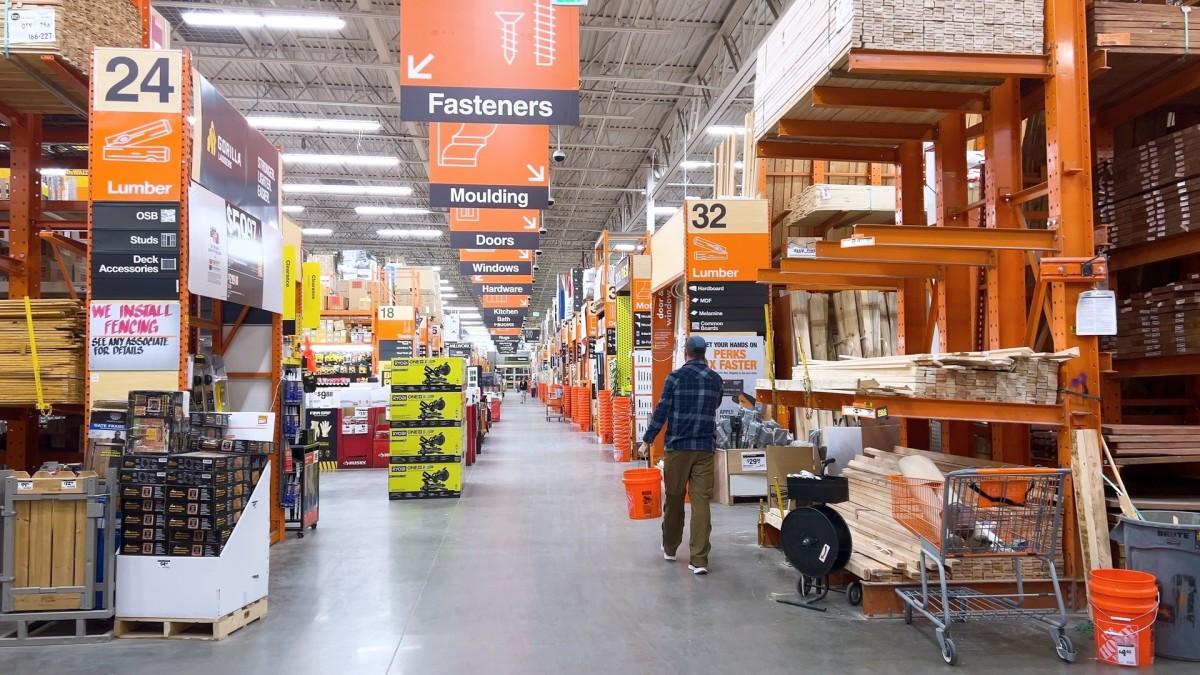
In 2025, Home Depot was the world’s largest home improvement retailer based on net sales, according to a recent Securities and Exchange Commission (SEC) filing.
The retailer reported $164.7 billion in sales at the close of FY2025, up 3.2% from 2024.
Because of the company’s sheer size and reach — it serves both DIYers and pros, and sells merchandise in every category from hardware to seasonal decor — trends in its sales often mirror wider trends in the economy and housing market.
Which is why the latest shift in its shoppers’ behavior is particularly worrisome.
Home Depot has seen big drop in discretionary spending
Home Depot’s recent 10-K filing reveals that while the retailer has seen an uptick in big ticket sales, it’s seen a significant drop in appliance sales.
In Q4 FY2025, big-ticket transactions of $1,000 or more were up 1.3%, year over year. However, appliance sales have consistently been dropping for the past three years, making up just 8.5% of the company’s total net sales in 2025, down from 8.8% in 2024, and 9.1% in 2023.
Instead of shelling out on discretionary items, like a new dishwasher or high-tech fridge, shoppers are spending money on repair and maintenance categories, like plumbing and electrical, the data shows.
This seemingly indicates a consumer base that has a cautious attitude about the state of the economy. They’re willing to spend on essentials, but not as eager to drop money on unnecessary upgrades.
“[Consumer uncertainty] is still the number one reason why people are telling us, our customers are telling us, that they’re not investing, certainly in large projects,” Home Depot CEO Ted Decker told investors during the company’s Q4 FY2026 earnings call.
“[It] has everything to do with consumer confidence and sentiment, jobs picture, overall, you know, price levels and affordability in the economy,” he continued.
Shutterstock
Remodeling spending is also slowing
It’s not just discretionary spending that’s slowing, either. Home Depot’s filing also reveals that homeowners are spending less on essential improvements and remodeling projects.
“You’ve heard us talk before about the cumulative underspend in home improvement,” Decker told investors. “We used some third-party consulting folks who put that at $22 billion today, that people have underspent on the aging home.”
The underspend can be seen in categories like bath, which saw a 0.2% drop year-over-year, flooring, which saw a 0.4% drop, and kitchen & blinds, which saw a 0.1% drop.
Annual spend on improvements and maintenance to owner-occupied homes is expected to decline even more in 2026 according to Harvard University’s Joint Center for Housing Studies.
“The Leading Indicator of Remodeling Activity projects that year-over-year growth in home renovation and repair spending will be 2.9 percent early this year before easing to 1.6 percent growth by the end of the year,” a January 2026 report from the research center said.
Both the Joint Center for Housing and Home Depot agree that this drop in essential spending is also tied to a negative economic outlook.
“Our customers tell us they have concerns over general economic uncertainty, including inflation, growing job concerns, and higher financing costs,” Home Depot’s CFO Richard McPhail said during February’s investor call.
The housing market and Home Depot customers
Larger housing market trends have also had a major effect on Home Depot’s shoppers.
“Housing turnover has remained at historical lows since 2023, which has significantly reduced demand for projects and other purchases associated with buying and selling a home,” McPhail said during the investor call.
“Turnover obviously helps people fix things up before they sell, and the new owner modifies the house to how they want it,” Decker agreed. “It also has an impact on the people who think they’re gonna move and are just waiting in more of a repair than a replacement cycle.”
There does seem to be some indication that housing market tides are beginning to turn, at least in some corners of the country. TheStreet’s Laura Grace Tarpley recently covered Redfin’s assessment that we are finally in a buyer’s market.
While the data may bear that out, consumers aren’t yet fully confident that the shift will persist, something their spending reflects.
“As we look ahead to fiscal 2026, we anticipate these pressures will persist, as we have not yet seen a catalyst for an inflection in housing activity,” McPhail told investors.
Related: Dollar General makes a big change that might upset customers
