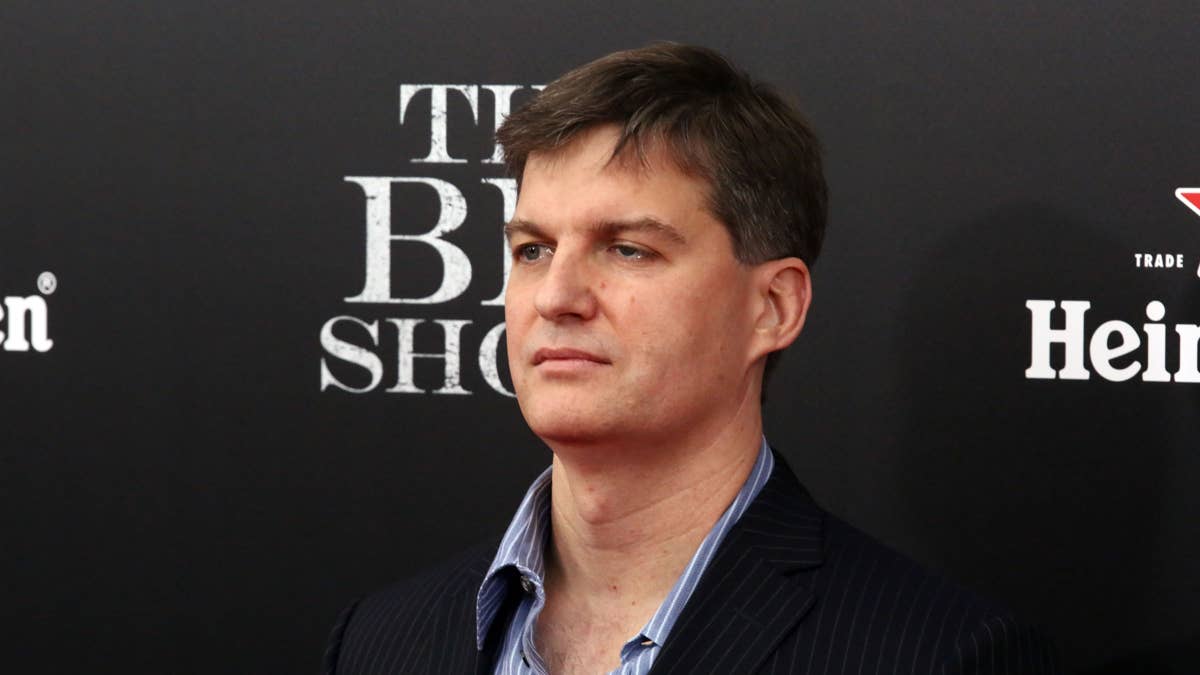
Michael Burry built his reputation calling the 2008 housing crash, a trade immortalized in “The Big Short.” Since then, Wall Street has watched every new position he takes, even when his timing has occasionally run ahead of the market by months or years.
This summer, Burry loaded up on bearish bets across some of the market’s most crowded AI-linked trades, spanning electric vehicles, heavy industry and semiconductors. A month later, the market pullback he seemed to be waiting for has actually shown up, and his scorecard is starting to fill in.
How Burry’s Tesla and Caterpillar short positions are performing
Burry’s short positions on Tesla and Caterpillar have moved sharply in his favor during July’s broader market pullback, CNBC reported on July 24. Burry disclosed in late June that he shorted Tesla at $416.22 a share. Caterpillar, meanwhile, has slid about 16% this month to $894.54 from the $1,060.98 level where Burry entered his short.
Tesla’s drop isn’t just about Burry. The company’s second quarter 2026 earnings missed badly. EPS came in at $0.33 against analyst estimates of $0.51, CNBC reported, sending the stock sharply lower after the print. Burry said he hasn’t covered the short. “It gets smaller all on its own,” he wrote.
More Tesla:
- Tesla merger with SpaceX won’t save investors, top analyst says
- Tesla stock gets a surprising SpaceX reset
- Tesla’s $1.4 trillion valuation rests on what happens next in one city
Four of the five publicly disclosed trades in Burry’s basket have now turned in his favor. Along with Tesla and Caterpillar, a semiconductor ETF and Applied Materials have both fallen from the position where he shorted them. Nvidia is the outlier, climbing instead of falling, a reminder that even a well-timed short book rarely sweeps every position.
Burry disclosed the trades through his Substack newsletter, Cassandra Unchained, rather than waiting on a quarterly 13F filing. That real-time disclosure is part of what has made his positioning so closely watched this year, since traders can react to his moves within hours instead of months.
Why Burry’s Nvidia and semiconductor ETF bets are complicated
Burry’s chip-related bets have produced the messiest results of the group. He shorted the iShares Semiconductor ETF, ticker SOXX, at $642.80. The fund’s net asset value stood at $640.65 on June 30, near the top of its 52-week range, with a year-to-date return of 113%, as TheStreet reported. That kind of run is exactly the setup Burry tends to target.
Applied Materials has fallen, dropping from Burry’s $729.40 entry to roughly $562.80, a decline of more than 20%, Benzinga reported. That move lined up with Burry’s argument that semiconductor valuations had climbed too far, even as the underlying companies kept reporting strong numbers.
Nvidia is where the thesis has not worked. Burry shorted the stock at $198.09, and shares instead climbed past $210, where he increased his position on July 24, CNBC reported. “I continue to hold puts in good size,” he said. “I believe much of current and future demand is not driven by end customers, end demand. Much and possibly most is financed, off-balance sheet and not lit.” Nvidia’s sales rose roughly 85% year-over-year in its most recent quarter, underscoring why betting against the chip leaders carries real risk.
Burry has been building this basket into July as well. On July 24, he disclosed initiating a short in Micron at $933.86, according to CNBC, after the stock had already climbed sharply over the prior year.
Astrid/Getty Images
Why Burry shorted Caterpillar stock for the first time ever
Caterpillar stands out because Burry has almost never bet against it before. “Caterpillar jumped out at me. I have never shorted Caterpillar,” he wrote in the Substack post disclosing the trade, according to TheStreet. He had long owned the stock on the long side and described it as reliably profitable.
Caterpillar’s Q1 2026 sales and revenues reached about $17.4 billion, up 22% year-over-year. Operating cash flow was $1.9 billion. The company deployed $5.7 billion toward buybacks and dividends in that single quarter and had a record order backlog. The CEO called it “robust order activity” on the earnings call, Fortune reported.
Much of that strength traces back to Caterpillar’s unlikely second act as an AI infrastructure supplier. Its Energy and Transportation division, which makes the large engines and turbines used in data centers, saw sales climb 17% to $8.4 billion in a recent quarter, as electricity demand from AI computing pushed customers toward Caterpillar’s generators.
Burry is not betting that the business is broken. He is betting that a 48.1 times trailing price-to-earnings multiple has priced in more AI infrastructure than the cycle can sustain, especially if data center construction eventually slows.
What Burry’s short positions mean for stock market investors
Tesla remains the riskier side of the trade, even with the stock lower than where Burry entered. Elon Musk‘s fan base is large and the company has a habit of producing surprises. From robotaxi updates to the new Optimus robot, Tesla has squeezed bearish positions before, and a single announcement could erase weeks of gains for bears.
Burry’s own track record cuts both ways too. He called Tesla a bubble in 2021, was mocked by Musk as a “broken clock,” and only looked right after a long delay, as TheStreet reported. The pattern suggests he tends to get the diagnosis right before the timing actually works.
For now, the July pullback has done what months of warnings could not, giving Burry’s basket real numbers to point to instead of just a thesis. Whether that continues likely depends on how the next round of earnings from Tesla, Caterpillar and the broader AI supply chain land in the weeks ahead, and on whether hyperscaler spending plans hold up under closer scrutiny.
Related: Michael Burry sends strong warning on AI development path
