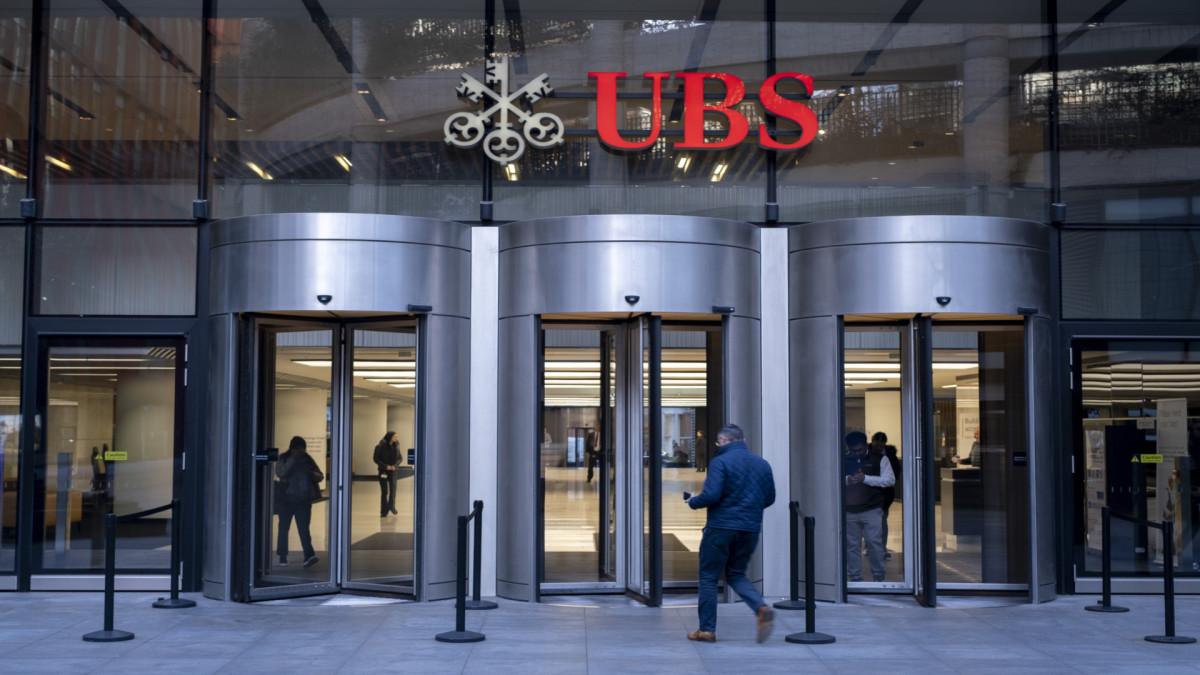
The S&P 500 is having its worst weekly stretch in a year. Oil prices are surging. Iran war fears are rattling every asset class. Traders are now pricing in a 50% chance of a Fed rate hike by October. And yet UBS just told investors the index is going to 7,700 by year-end.
That is roughly 17% above where the S&P 500 was trading on March 20, near 6,585. UBS is not hedging. It is calling the selloff noise and saying the fundamentals are still intact.
What UBS is saying about the S&P 500
The note was led by David Lefkowitz, UBS’s head of U.S. equities. It sets a two-stage target: 7,300 by June, then 7,700 by December. Three pillars support the call.
What is driving UBS’s confidence in stocks
- Earnings growth: UBS expects S&P 500 profits to grow 11% in 2026, reaching $310 per share. Q4 is already tracking at roughly 14% year-over-year.
- Fed rate cuts: The bank expects two more 25-basis-point cuts this year, which historically supports equity gains when recession is avoided.
- AI adoption: The bank sees AI spreading beyond big tech into the broader economy, driving productivity gains and widening the earnings base.
On earnings, UBS forecasts S&P 500 earnings per share of $277 in 2025, growing 11% to $310 in 2026. Q4 results are already tracking at roughly 14% year-over-year. Lefkowitz’s team described forward guidance as “a touch cooler than in recent quarters but still encouraging.”
More Wall Street
- Billionaire Dalio sends 2-words on Fed pick Warsh
- Top analyst bets these stocks will boost your portfolio in 2026
- Bank of America sends quiet warning to stock market investors
There is also a notable shift in where earnings are coming from. The Magnificent 7 drove nearly two-thirds of S&P 500 profit growth in 2025. In 2026, that share drops to roughly half. The rest of the market is picking up the slack. UBS sees that as a healthy sign for the durability of the rally.
Iran poses a stock market problem
UBS is not pretending the war does not exist. Its base case is that the conflict causes only a brief disruption to energy supplies. It expects oil prices to pull back from current levels, clearing the way for stocks to move higher.
But it issued a direct warning. If energy does not start flowing from the Persian Gulf in the coming weeks, investors should brace for downside. That is not a minor caveat. Brent crude is around $112. WTI is near $97. The Strait of Hormuz remains effectively closed.
UBS’s comfort comes from history. In most past geopolitical shocks, markets bounced back quickly once the initial panic faded. The bank is betting this follows that pattern.
If the rate cut scenario falls apart, one of UBS’s three pillars goes with it. The bank’s counter is that earnings do not need cuts to grow. AI productivity gains are real and spreading. Corporate profits, in UBS’s view, can hit 11% growth regardless of what the Fed does. The argument is that this cycle is different because the earnings driver is structural, not purely monetary.
Kemp/IGetty Images)
What this means for investors
The math here is stark. The S&P 500 needs to gain roughly 1,100 points from current levels to reach 7,700. That has to happen in about nine months. It is an ambitious call in a calm market. Right now, the market is anything but calm.
JPMorgan is on the other side of this trade. The bank has warned that if the S&P breaks below its 200-day moving average near 6,600, strong support may not appear until 6,000 to 6,200. The index is sitting just above that line. UBS’s argument is that it holds.
History cuts both ways. The 1973 oil shock sent the S&P down 16% and the market did not recover for six years. Russia’s 2022 Ukraine invasion caused a 7% drop that reversed in about four weeks. Which script this conflict follows depends almost entirely on how long the Strait of Hormuz stays shut.
UBS is betting on a fast recovery. Q1 earnings season in April will be the first real test of whether the bank is right. If profits come in strong and the conflict shows signs of cooling, the bull case gets a lot easier to defend. If energy stays disrupted and inflation reaccelerates, 7,700 starts to look like a very different kind of number.
Related: UBS economists issue stark warning on U.S. economy
