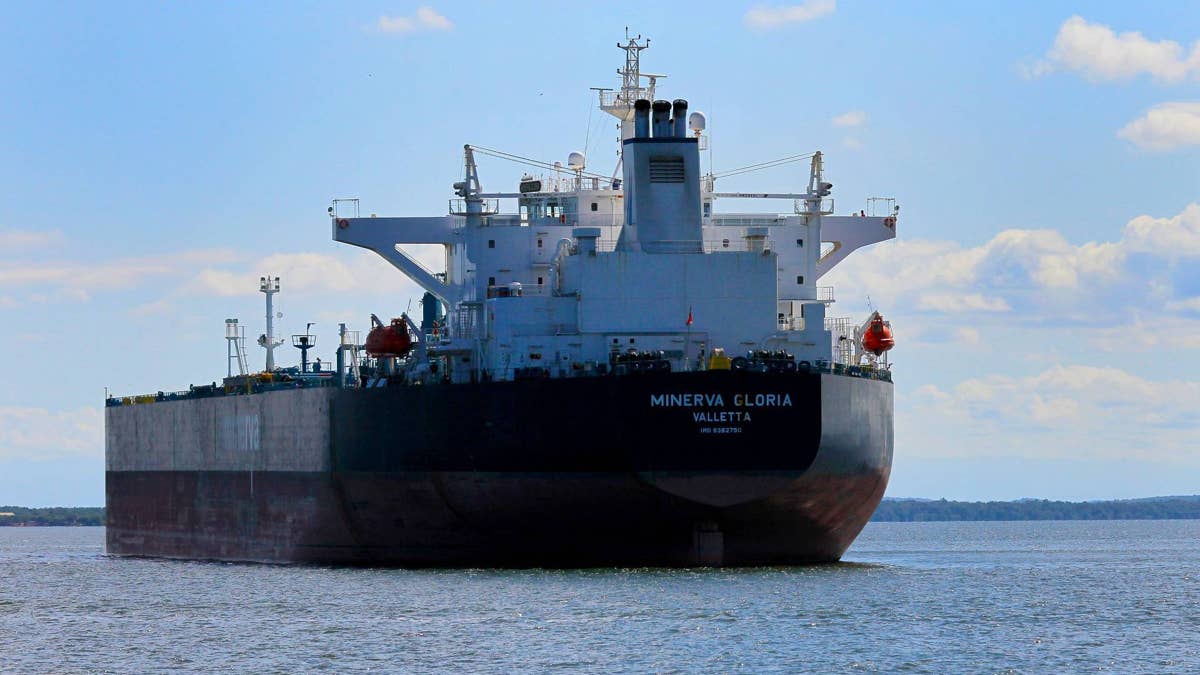
The Islamabad peace talks between the U.S. and Iran ended without a deal on April 12. The Strait of Hormuz remains effectively closed. Oil prices are reacting.
Vice President JD Vance, who led the U.S. delegation through more than 21 hours of negotiations, announced Sunday, April 12, that no agreement had been reached. Iran’s refusal to abandon its nuclear ambitions was a central sticking point, according to NPR.
Within hours, President Donald Trump announced a U.S. naval blockade of the Strait, posting on Truth Social that the Navy would block “any and all Ships trying to enter, or leave, the Strait of Hormuz,” according to Time.
For oil markets, the breakdown removes the only scenario that could have pushed prices lower. Every other path leads higher.
How oil is reacting to the Hormuz closure
The Strait carries roughly 20% of the world’s daily oil supply. It has been operating at approximately 10% of its normal pace since the ceasefire was announced last week, according to Kevin Hassett, director of the White House National Economic Council, as CBS News reported.
Two empty crude tankers that had begun approaching the waterway made U-turns immediately after the talks collapsed, Bloomberg indicated.
More Oil and Gas:
- The world’s biggest gas field matters just as much as oil right now
- Goldman Sachs reveals top oil stocks to buy for 2026
- U.S. economy will show resilience, despite rising oil prices
The signal from shipping markets was immediate: The physical path to normalcy just narrowed further.
An estimated 136 million barrels of crude oil and products remain stuck in the Gulf due to the conflict, according to Vikas Dwivedi, global energy strategist at Macquarie Group, Reuters reported. Redirecting tankers back to the Middle East could take until June, and restoring production capacity could take as long as five months, experts cited by CNBC noted.
Where oil prices have been and where analysts say they are heading
The market has already shown how aggressively it reacts to Hormuz developments. When the ceasefire took effect last week, Brent fell 13% to $94.80 and WTI dropped more than 15% to $94.41, its biggest single-day decline since 2020, according to CNBC.
Before that, the Brent spot price had hit $124.68 on April 8, CNBC confirmed.
Goldman Sachs had already warned that if the Strait remains mostly shut for another month, Brent would average above $100 per barrel for the rest of 2026. In an extended closure scenario, Goldman projected Brent at $120 in the third quarter and $115 in the fourth, according to OilPrice.com.
The war has already pushed oil prices up approximately 50% since it began, the largest annual price forecast increase in Reuters poll records, with analysts lifting their 2026 Brent forecasts 30% to an average of $82.85, according to Investing.com.
Bula/Getty Images
What analysts say about the oil outlook
“If we have a blockade, we still have the problem of a shortage in the market of about 7 million barrels of crude, 4 million barrels of product not getting out. And we just added to that by making the Iranian barrels off the market,” said Karen Young, a senior scholar at Columbia University’s Center on Global Energy Policy, according to CNN.
“So, I think for now and into the end of 2026 we’re looking at elevated oil prices for certain,” Young added.
WoodMac has modeled the broader economic stakes. If Brent averages $100 per barrel in 2026, global growth slows to 1.7% from a pre-war forecast of 2.5%. In a $200 oil scenario, a global recession becomes likely, with the world economy contracting by 0.5%, according to OilPrice.com.
Key figures in the oil and Hormuz situation:
- Strait of Hormuz share of global oil supply:Approximately 20%
- Current Hormuz traffic:Approximately 10% of normal
- Brent at ceasefire announcement:Fell 13% to $94.80
- Brent spot price before ceasefire:$124.68 on April 8
- Goldman Sachs extended closure scenario:Brent $120 Q3, $115 Q4
- Barrels stuck in Gulf:Approximately 136 million
- Price increase since war began:Approximately 50%
Sources: NPR, CBS News, CNBC, OilPrice.com, Investing.com
Why this is different from past oil shocks
The Strait of Hormuz has been threatened before, but it has rarely been this close to a complete closure for this long. Maritime intelligence firm Windward noted that even during the ceasefire, “transit through the Strait of Hormuz remains restricted, coordinated, and selectively enforced” and that “no meaningful increase in traffic” followed the announcement, according to OilPrice.com.
Now, with talks collapsed and a U.S. naval blockade in effect, the risk of a full supply shock is no longer theoretical.
The oil market does not wait for inventories to drain before reacting. It prices fear, and the situation that emerged on April 12 gave it a great deal to price.
Related: Oil traders are seeing something in Iran’s truce that stocks aren’t
